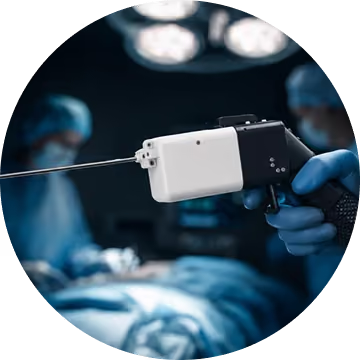
Victor is being developed first for procedures where access is narrow, anatomy is delicate and conventional instruments have limited freedom of movement.
pituitary and skull base tumours.

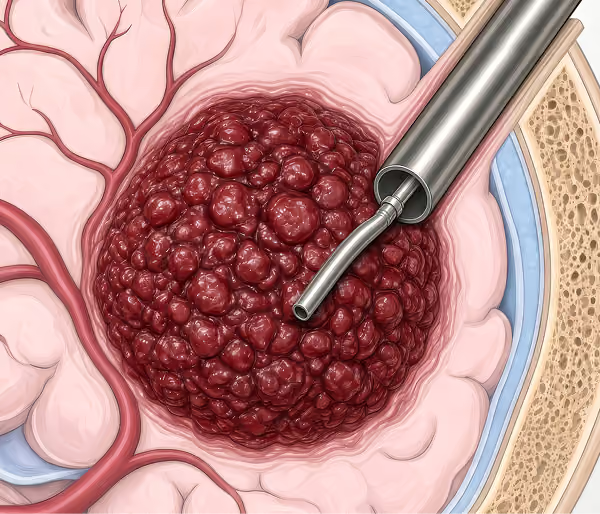
intracerebral haemorrhage and selected brain tumours.
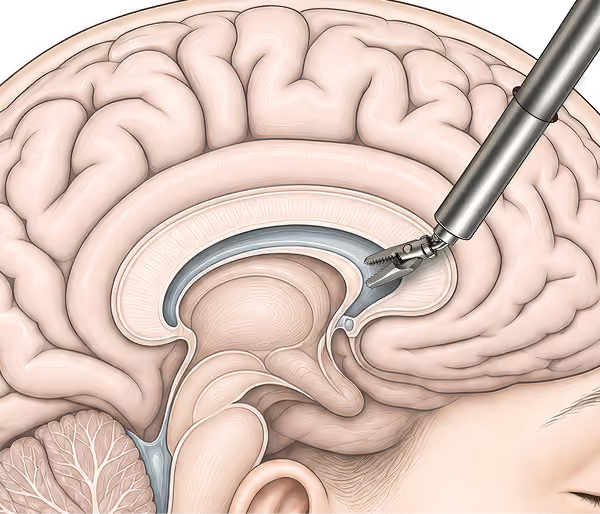
hydrocephalus, intraventricular tumours and cysts.
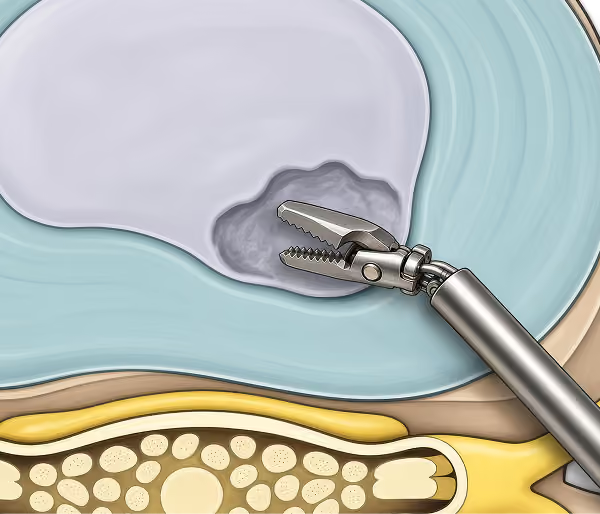
disc herniation,
spinal stenosis.
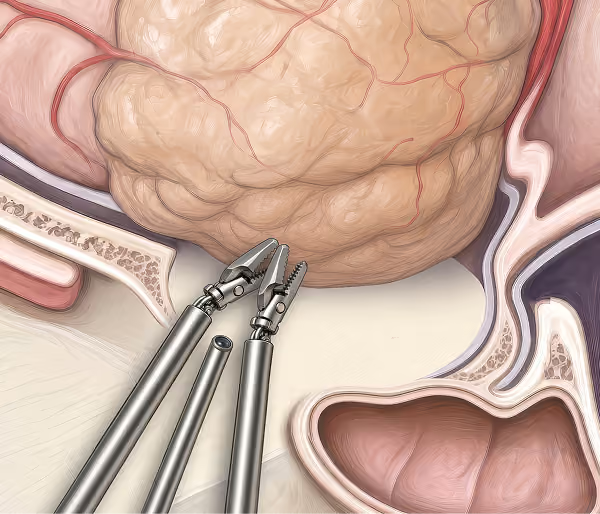
Pituitary and skull base procedures are performed through narrow corridors such as the nose and orbit, within millimetres of the optic nerves, carotid arteries and cavernous sinus. Conventional rigid instruments have little room to angle around these structures.
Victor's articulated instrument is designed to add dexterity within this corridor, while its AI is designed to support orientation as the approach narrows.
Deep seated cranial pathology conventionally requires a larger craniotomy and more retraction of healthy brain tissue to create a working corridor. Victor is designed to work through a small cranial port, extending dexterity to the site without the same degree of exposure.
The ventricular system is complex and confined. Orientation is easily lost once inside it, particularly with limited instrument freedom to correct course. Victor is designed to improve both orientation and control within the ventricles.
Minimally invasive spinal approaches work through narrow tubular corridors, where conventional instruments have limited freedom to manoeuvre once inside. Victor is designed to add dexterity through these small working channels.
We welcome conversations with clinicians, hospitals, researchers, patient organisations and partners who share our ambition.